For a long time, industrial grease was treated as a routine maintenance consumable.
It was purchased, applied and replaced as part of a maintenance schedule. As long as the machinery kept running, lubrication rarely received much strategic attention. That is changing.
Indian manufacturing is becoming more automated, production cycles are becoming more demanding and industries are placing greater emphasis on equipment uptime. Machinery is expected to operate for longer periods, often under heat, heavy loads, vibration, moisture and continuous mechanical stress.
In this environment, industrial lubrication is increasingly being considered as part of equipment reliability rather than simply a maintenance requirement. This is where High-Temperature EP Grease earns its place.
What Is High-Temperature EP Grease?
High-Temperature EP Grease is a specialty industrial lubricant designed for applications where elevated temperatures and demanding mechanical conditions occur together.
The term EP stands for Extreme Pressure. EP lubrication is relevant where moving components experience high loads, pressure or impact and require additional protection against friction and wear.
High-temperature applications introduce another challenge.
The lubricant must continue to perform while exposed to the heat generated by the equipment or manufacturing process.
Jade Chemicals’ High-Temperature EP Grease is formulated using a high-viscosity synthetic base oil, Tungsten Disulfide (WS₂) particles and specialised additives. The formulation is designed for demanding industrial lubrication applications, including bearings and lubrication points exposed to elevated temperature, high load, impact load, moisture and high shear.
The significance is not simply that it is a grease designed for high temperatures.
It is the fact that it is intended for industrial environments where several demanding conditions can exist at the same time.
Why High Temperature Changes the Lubrication Challenge
Heat places considerable stress on conventional lubrication systems. But in a real industrial environment, temperature is rarely the only concern. A bearing may be exposed to heat and heavy loading. A production machine may operate continuously while experiencing vibration and high shear. Equipment in a power plant may have to function around high-temperature processes for extended periods. This changes the way lubrication needs to be evaluated.
The question isn’t simply: “Can the grease handle high temperature?”
The more useful question is: “Can the lubrication system continue protecting the equipment under the actual combination of conditions it will face?”
That distinction is important. Industrial lubrication is ultimately about the operating environment, not just a temperature figure on a technical specification.
Why Extreme Pressure Performance Matters
Temperature is only one part of the equation. Industrial machinery can also subject bearings and moving components to substantial mechanical loads, impact and pressure between contacting surfaces.
This is where Extreme Pressure (EP) lubrication becomes particularly relevant.
EP grease is designed for applications where mechanical conditions can be severe and where maintaining protection between moving surfaces is critical.
This becomes particularly important in industries where equipment operates continuously and where a lubrication-related failure can interrupt production.
For these applications, lubrication isn’t simply about reducing friction. It is about protecting the equipment while it performs under demanding conditions.
Where High-Temperature EP Grease Is Used
The applications for High-Temperature EP Grease extend across several industrial sectors. Its relevance is particularly strong in machinery and lubrication points exposed to high temperature, heavy loads, impact, moisture, high shear or continuous operation.
Applications include:
Steel Plants:
Steel manufacturing involves some of the most demanding operating conditions for industrial equipment. High temperatures, heavy mechanical loads and continuous production cycles place significant demands on bearings and other moving components. High-temperature lubrication can therefore form an important part of maintaining equipment reliability across steel-processing operations.
Power Plants and Thermal Power Plants:
Power generation equipment operates for long periods, often with demanding temperature and mechanical conditions. High-temperature EP grease can be used in suitable lubrication points within power-generation environments. One specific application is soot blowers in thermal power plants, where lubrication needs to withstand the demanding conditions associated with the equipment.
High-Temperature Furnaces and Kilns:
Furnaces and kilns expose surrounding equipment and lubrication points to elevated temperatures. In these environments, conventional lubrication approaches may not always be suitable. High-temperature grease can be considered for appropriate bearings and lubrication points where heat resistance and mechanical protection are required.
Forging and Machine-Tool Factories:
Forging environments combine heat with substantial mechanical forces. Machine tools and associated equipment can also place demanding requirements on bearings and moving components. This makes high-temperature and extreme-pressure lubrication relevant to selected forging and machine-tool applications.
Rotational Moulding and Plastic Processing:
High-temperature EP grease also has applications beyond heavy metal and energy industries. Rotational moulding machines and plastic-processing equipment can have lubrication points exposed to heat, mechanical movement and continuous operation. The same lubrication principle applies: the lubricant needs to remain effective under the conditions experienced by the equipment.
Bearings and Automobile Components:
Bearings are among the most common points where industrial lubrication becomes critical. In automotive manufacturing and automobile-component applications, reliable lubrication can be important for equipment and components operating under demanding mechanical conditions.
Automation and Robotics:
As factories become increasingly automated, lubrication requirements are extending into specialised machinery and robotic systems. Jade Chemicals identifies applications including robots used in brewing and wine-production environments, where equipment reliability and appropriate lubrication are important to continuous operation.
Paper and Carton Manufacturing:
Paper mills and carton manufacturing operations involve machinery running continuously through demanding production cycles. Bearings and moving components require lubrication suited to the operating conditions, particularly where heat and mechanical stress are involved.
These applications may appear very different from steel or power generation.
The underlying requirement, however, is similar: keep critical moving components protected while the equipment continues to operate.
Why This Matters for Indian Manufacturing
This is where the wider industrial context becomes important. India’s manufacturing base spans steel, power, engineering, automotive, plastics, paper, packaging and several other sectors that depend on continuous equipment operation. At the same time, manufacturers are investing in automation, increasing production efficiency and seeking greater utilisation from their existing assets. That makes unplanned downtime increasingly expensive.
A failed bearing is rarely just a failed bearing.
Depending on its location within the production process, it can lead to maintenance intervention, replacement costs, lost production and disruption to an entire operation.
This is why lubrication is increasingly being viewed through the lens of reliability, maintenance efficiency and equipment life.

The Role of Tungsten Disulfide in High-Temperature Lubrication
One of the interesting aspects of Jade Chemicals’ High-Temperature EP Grease is the use of Tungsten Disulfide (WS₂).
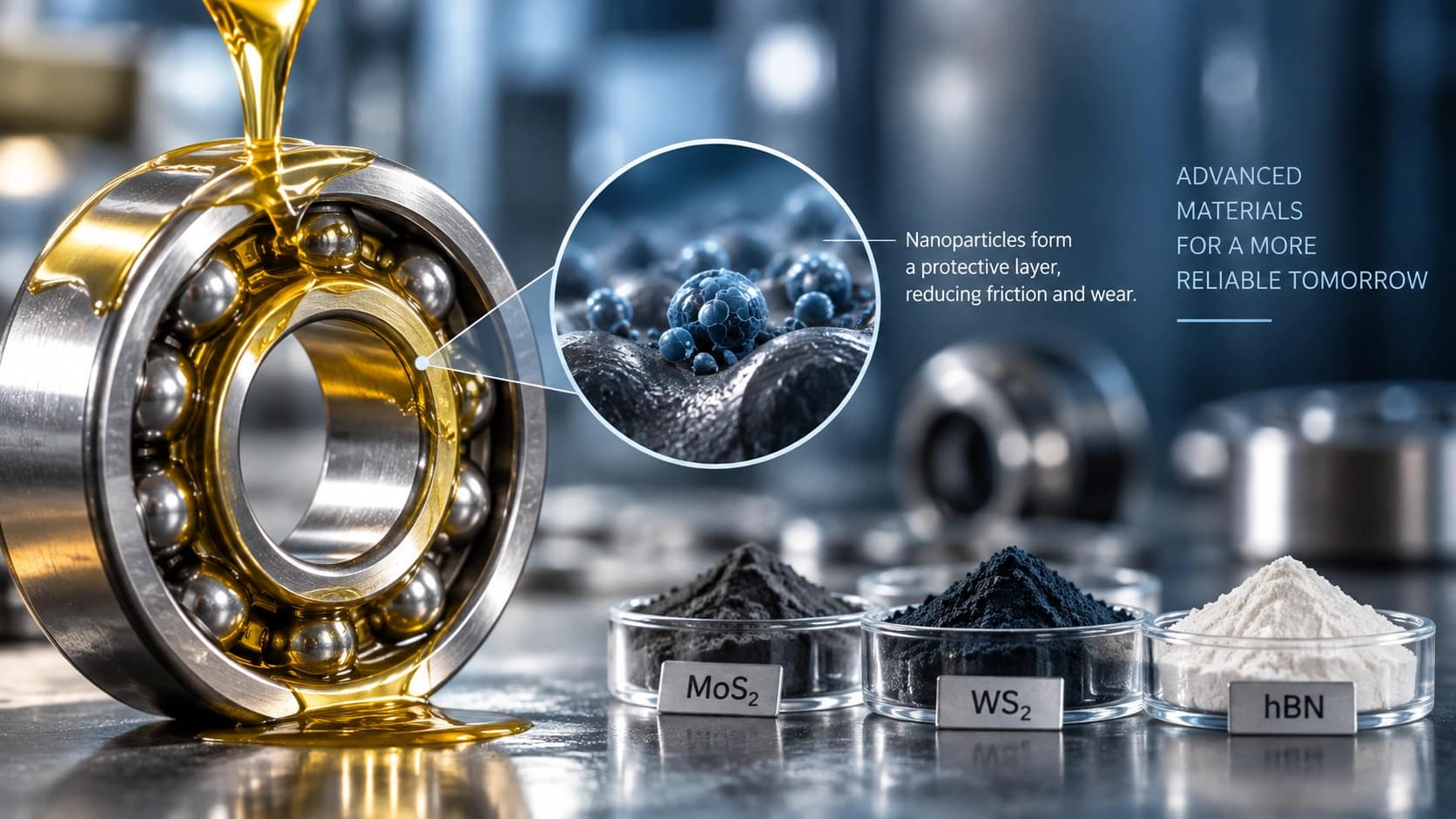
WS₂ is a solid lubricant recognised for its low-friction and load-bearing characteristics. It is used in specialty lubrication applications where conventional lubrication alone may not provide the desired performance. In a grease formulation, the role of WS₂ is particularly relevant to applications where lubrication needs to cope with demanding mechanical conditions. This is also part of a broader trend in industrial lubrication. Manufacturers are increasingly looking beyond conventional oils and greases towards specialty lubricants and solid-lubricant technologies designed around specific operating challenges.
The Shift From Lubricant Cost to Equipment Value
There is a useful change taking place in how industrial lubrication is evaluated. The question used to be largely:
“How much does the grease cost?”
Today, the more useful questions are often:
- What conditions will the equipment operate under?
- How critical is the lubricated component?
- How frequently does it require maintenance?
- What is the consequence of a lubrication-related failure?
- Can the lubrication system support more reliable operation?
This moves the discussion from product price to operating value. A relatively small lubrication decision can have a much larger effect when the equipment involved is critical to production.
Why High-Temperature EP Grease Is Becoming More Relevant
The importance of High-Temperature EP Grease isn’t because every industrial machine needs a high-temperature lubricant. It doesn’t.
Its value lies in the applications where heat, mechanical stress and continuous operation come together. That includes steel plants, power-generation environments, thermal power soot blowers, furnaces, kilns, forging equipment, machine tools, rotational moulding machinery, bearings, automobile-component manufacturing, specialised robotic equipment, paper mills and carton manufacturing. Each application has its own operating conditions. But the objective remains consistent: maintain effective lubrication where ordinary operating conditions are no longer ordinary.
Where Jade Chemicals Comes In
At Jade Chemicals, High-Temperature EP Grease is part of a wider portfolio of specialty industrial lubrication materials. The portfolio also includes Tungsten Disulfide (WS₂), Molybdenum Disulfide (MoS₂), Hexagonal Boron Nitride (hBN), PTFE-based products, anti-friction sprays and specialty coatings. This broader experience matters because industrial lubrication is rarely about selecting a product in isolation. It is about understanding the application. The equipment, temperature, mechanical load, operating cycle and surrounding environment all influence what type of lubrication solution makes sense. For a specialty chemical supplier, that application-led understanding is often more valuable than simply offering a long list of products.
Looking Ahead
As Indian industry becomes more automated and production-intensive, machinery will continue to operate under increasingly demanding conditions. That makes lubrication a small but important part of the larger reliability equation. High-Temperature EP Grease has a role to play wherever equipment needs protection under the combined pressure of heat, load and continuous operation. Its importance is therefore not really about the grease itself. It is about what the grease helps the machine do.