High Temperature EP Grease vs Regular Grease: Why It Outperforms Regular Grease?
Industrial environments possess heavy machinery that operate in extreme conditions such as heat, pressure, and load. In situations like these, it is essential to choose the right lubricant to help business minimize downtime, reduce wear and tear, and improve operational efficiency. It’s essential to understand the differences between High Temperature EP Grease and Regular Grease to enhance performance and improve longevity.
As a leading High Temperature EP Grease (-20°C to 800°C) Supplier in India, Jade Chemicals offers advanced lubrication solutions designed for demanding applications.
What is Regular Grease?
Regular grease is typically formulated using mineral oils and basic thickeners such as lithium or calcium. It is suitable for use-cases with a general-purpose application with moderate temperatures and loads.
However, it becomes an inefficient option in high-stress environments, since most regular greases begin to degrade and lose consistency at elevated temperatures, beyond 120°C–150°C. This leads to lubrication failure, increased maintenance needs, and doubles your overhead costs.
What is High Temperature EP Grease?
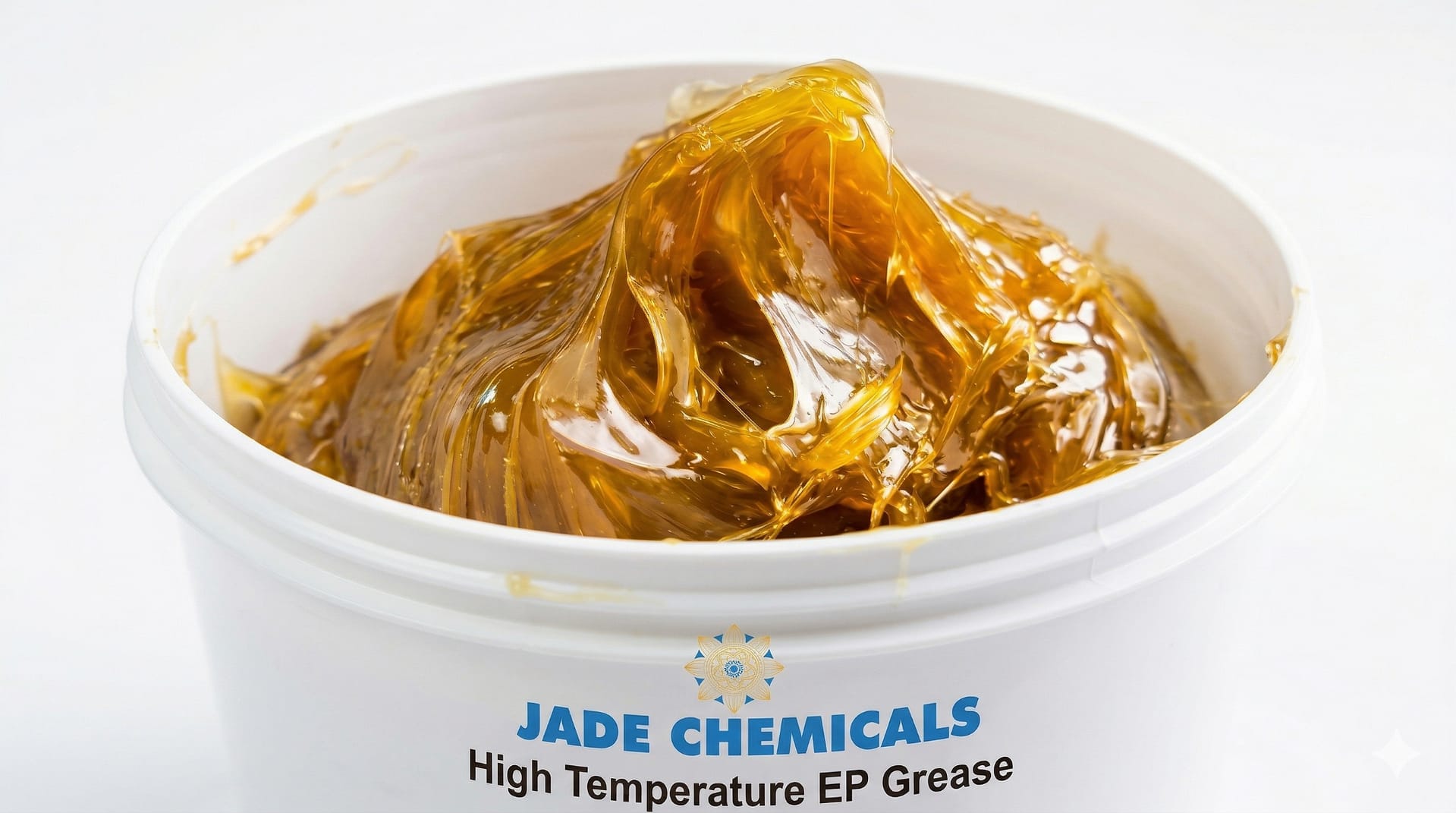
Jade Chemical’s High Temperature EP (Extreme Pressure) Grease is engineered for severe operating conditions. It’s formulated with special additives, solid lubrications that provide exceptional load-bearing and anti-wear properties.
Jade Chemicals’ High Temperature EP Grease operates effectively across an extended temperature range of -20°C to 800°C, ensuring stability even in extreme industrial environments.
Key Differences Between High Temperature EP Grease and Regular Grease
1. Temperature resistance
Regular grease cannot withstand prolonged exposure to high temperatures and tends to break down. In contrast, High Temperature EP Grease offers superior thermal stability, maintaining performance even in extreme heat conditions.
2. Load-bearing capacity
EP grease contains additives that form protective layers under high pressure, preventing metal-to-metal contact and reducing wear and tear. Regular grease lacks these advanced extreme-pressure properties.
3. Durability
High Temperature EP Grease provides extended service life due to its resistance to oxidation, thermal degradation, and mechanical stress. Regular grease often requires frequent reapplication under similar conditions.
4. Resistance to harsh environments
High Temperature EP Grease provides extended service life due to its resistance to oxidation, thermal degradation, and mechanical stress. Regular grease often requires frequent reapplication under similar conditions.
5. Application suitability
While regular grease is ideal for low to moderate applications, High Temperature EP Grease is specifically designed for heavy-duty industries such as steel, cement, automotive, and manufacturing, where both high temperature and load are constant factors.

When should you choose High Temperature EP Grease?
You should opt for High Temperature EP Grease when:
- ● Your equipment operates under extreme heat or fluctuating temperatures.
- ● The machinery experiences heavy loads or shock conditions.
- ● You are overloaded with downtime and increasing maintenance costs that need to be minimized.
- ● You are looking for a long-lasting lubrication solution and improve machine performance
The versatility of Tungsten Disulfide (WS2) Aerosol Spray makes it suitable for a wide range of industrial applications:
Make the right choice today with Jade Chemicals Solutions
Choosing the right grease is not just a maintenance decision, it directly impacts your operational efficiency and equipment durability. While regular grease serves basic needs, it falls short in demanding industrial environments.
For industries that require reliability under extreme conditions, High Temperature EP Grease is the superior choice. As a trusted High Temperature EP Grease (-20°C to 800°C) Supplier in India, Jade Chemicals delivers high-performance lubrication solutions that ensure durability, efficiency, and long-term cost savings.
For more information, please contact us:
🌐 Website: https://jadechemicals.in/
📞 Phone: +9188610 12686
✉️ Email: jade3chemical@gmail.com